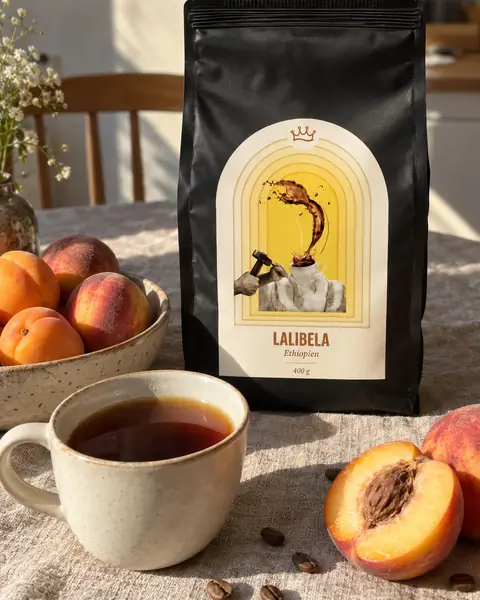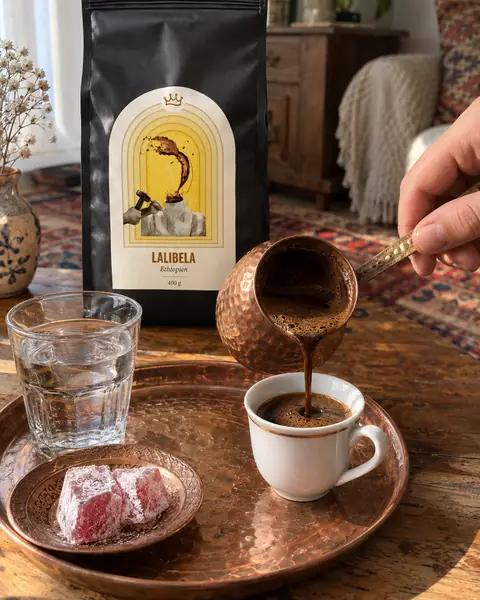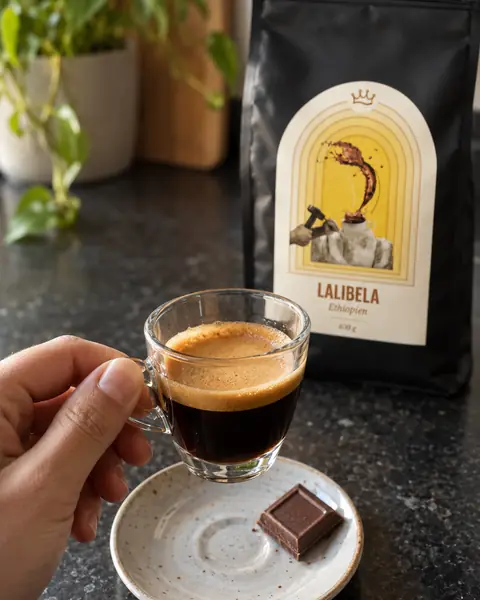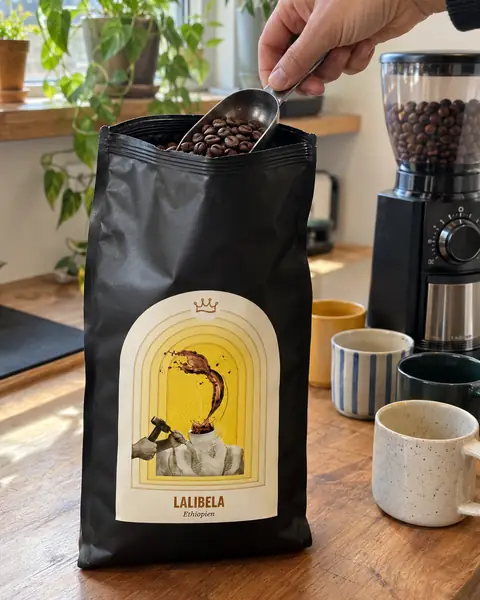
Limu · Ethiopia 🇪🇹
Carved out of rock
Lalibela is a holy town in the Ethiopian highlands where, some 800 years ago, churches were carved down into solid rock. We named this coffee after it, because a good roast is carved the same way: slowly, by hand, until nothing is left that does not belong.
IThe New Jerusalem
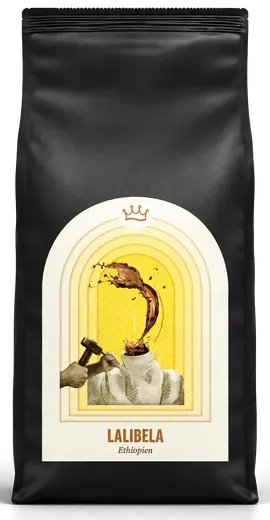
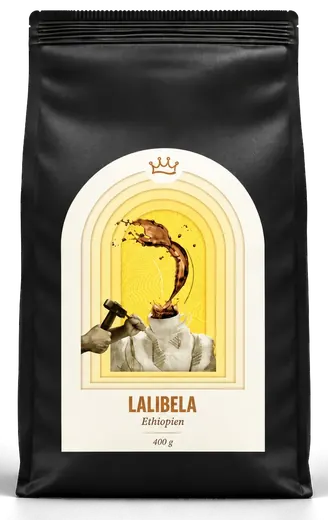
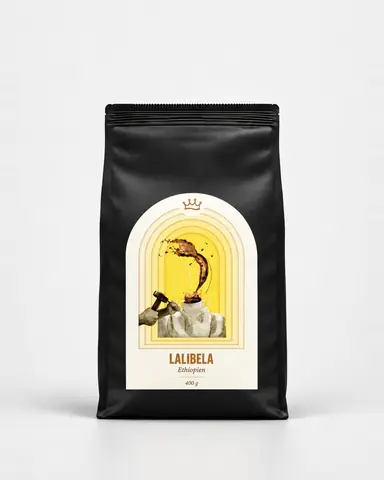
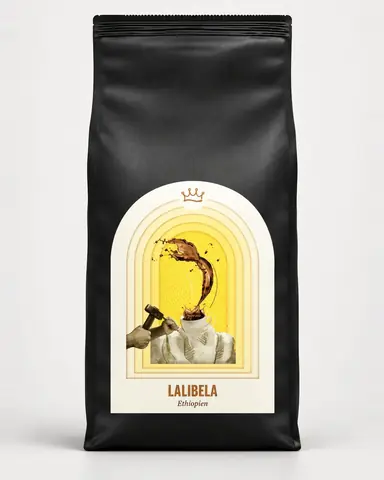
In the 12th and 13th centuries, under King Lalibela, eleven churches were hewn out of volcanic rock at about 2,500 metres — not built up, but cut downward into the ground, each from a single block. Pilgrims still walk there today, and the churches have been a UNESCO World Heritage Site since 1978. The hand with the hammer and chisel on our label is a nod to those masons.
IIWhere coffee was born
Arabica comes from Ethiopia. It still grows wild in the forests of the southwest, and the country has thousands of local "heirloom" varieties found nowhere else. Coffee there is not just a drink, it is a ceremony: in the buna, beans are roasted in a pan, ground by hand, brewed in a clay jebena and served in three rounds while friends and neighbours sit together.
IIIBruka Gudina, Limu
The beans come from the Bruka Gudina farm in Limu, in the forested south-west of Ethiopia near Jimma, at 1,800–2,000 metres. They are Grade 1, the top Ethiopian export grade, and processed natural: the ripe cherries dry whole in the sun, so the fruit's sugars pass into the bean, which is where the stone fruit comes from. The farm is certified Organic, UTZ, Rainforest Alliance and C.A.F.E. Practices. We roast it medium in Neusiedl am See, so the fruit stays bright and the chocolate stays round.
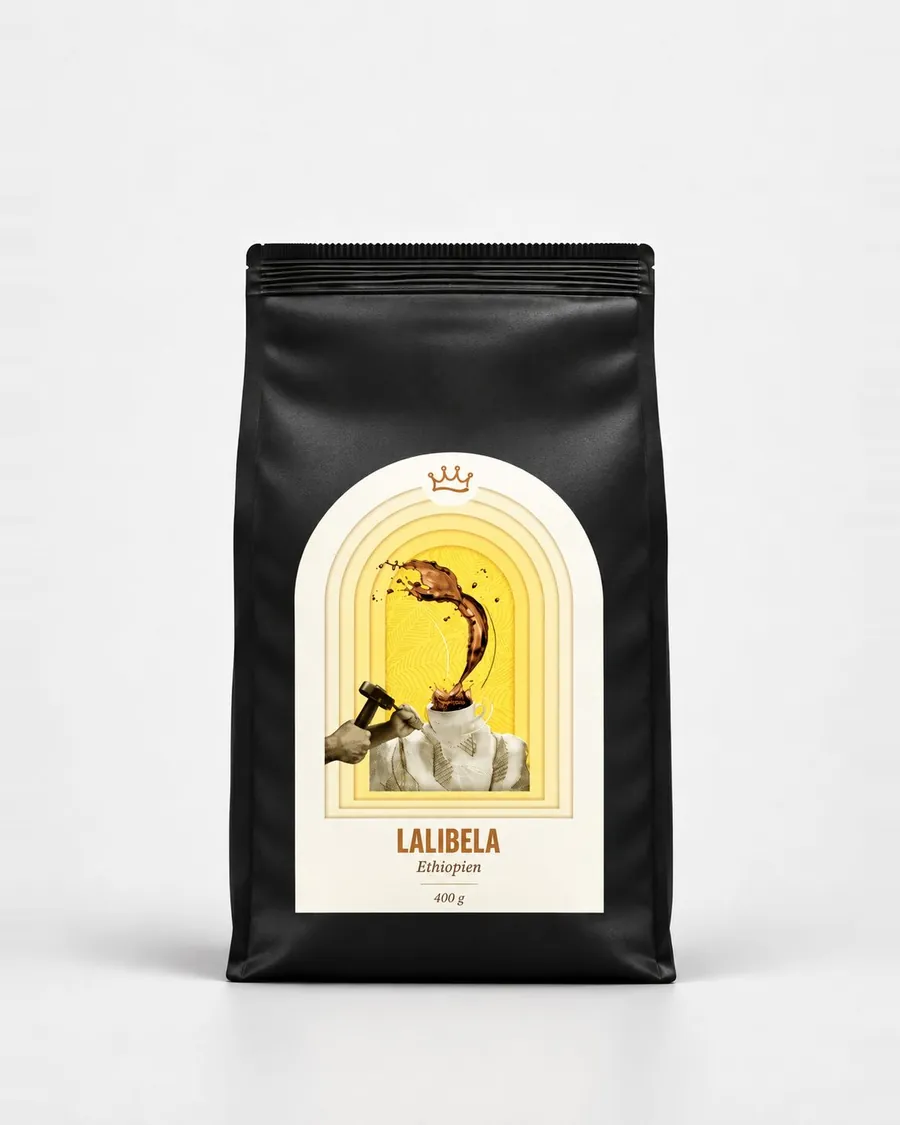 400 g