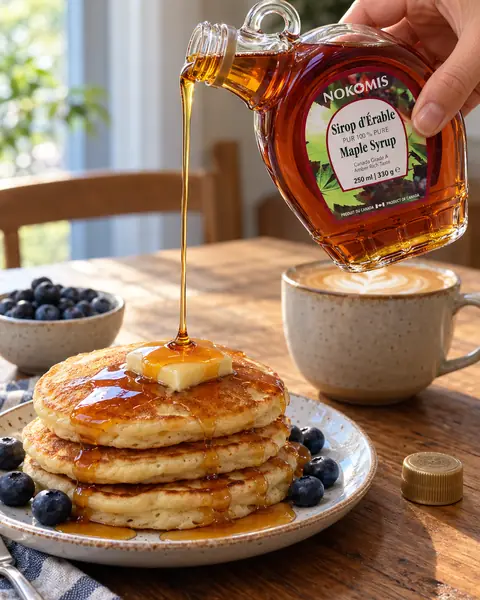
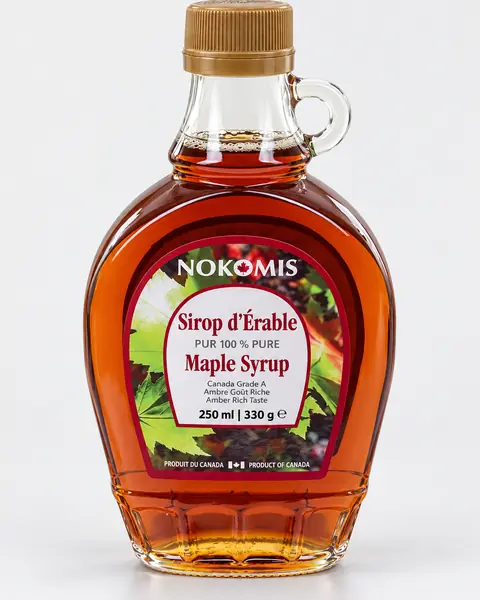
Most "pancake syrups" on the shelf are glucose syrup with maple flavouring. Pure maple syrup is something else: sap from the sugar maple, boiled until it thickens, and bottled as it is. Here is what that means in your kitchen.
🍁
One ingredient
The label has a single line: maple syrup. No glucose, no colouring, no flavouring, no preservatives — the colour and taste come from the boiling alone.
⚗️
Naturally contains minerals
Per USDA reference data, 100 g of pure maple syrup provides about 145% of the daily reference intake of manganese and about 90% of riboflavin (vitamin B2), plus some zinc, calcium and potassium.
🌱
Suitable for vegans
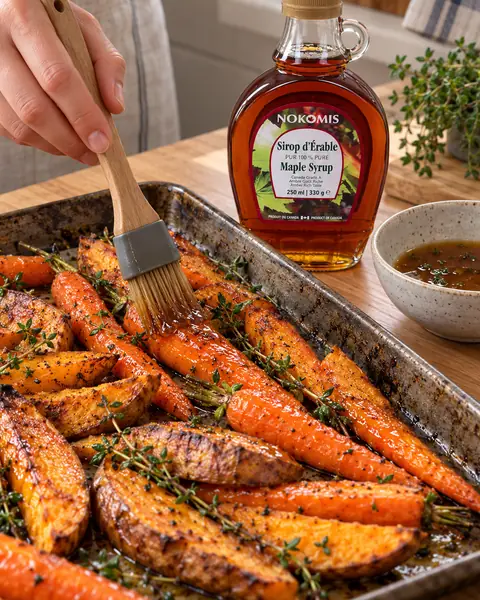
A plant-based alternative to honey: made from tree sap, not by bees. Use it 1 : 1 instead of honey in tea, yogurt, dressings and baking.
👅
More taste, so less is enough
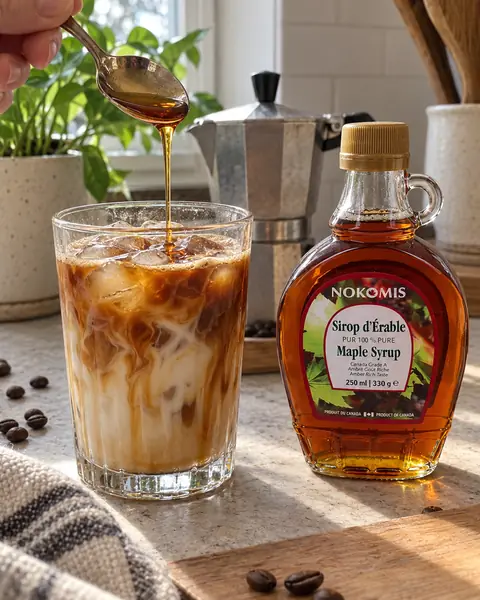
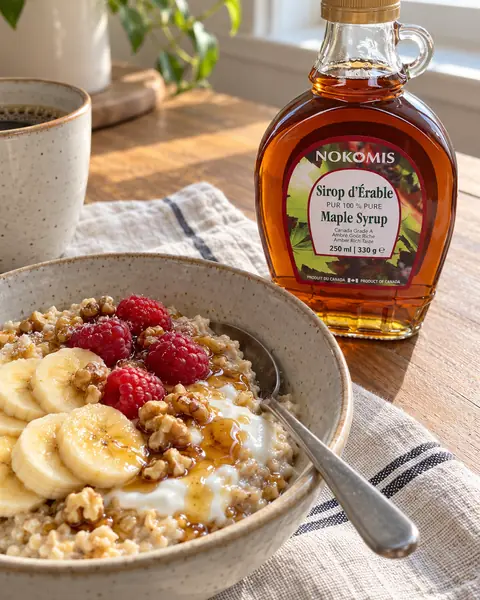
Caramel, vanilla and a light woody note: maple tastes of more than sweetness, so a teaspoon goes further than plain sugar in coffee, oats or yogurt.
🔬
A chemistry all its own
Researchers at the University of Rhode Island identified 54 compounds in Québec maple syrup, five of them new to science — one, formed while the sap boils, was named 'quebecol'.
🧊
Keeps for a long time
Unopened, it keeps in the cupboard. Once opened, keep it in the fridge and it stays good for months — see storage below.
Maple syrup is still a sugar: enjoy it as part of a varied, balanced diet. Nutrient values are USDA reference values for pure maple syrup, not a lab analysis of this bottle.
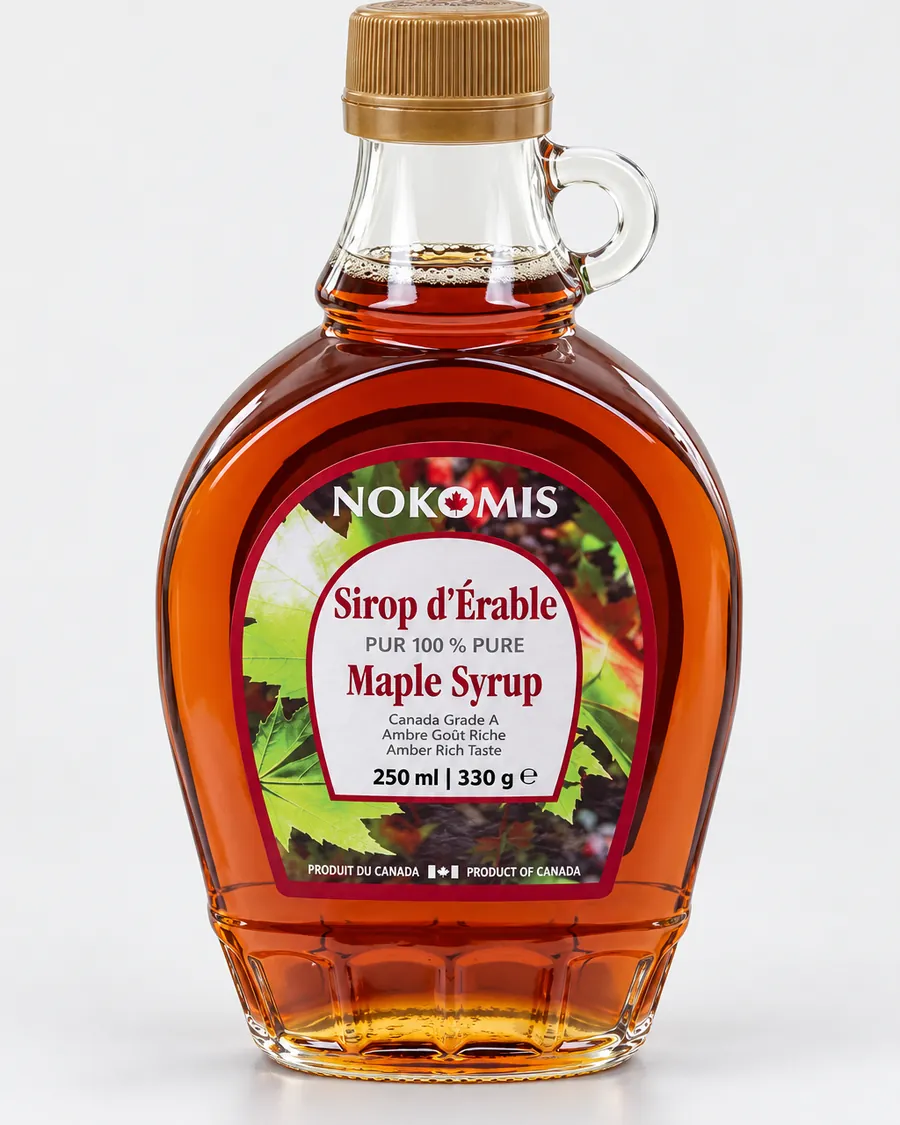 250 ml · Nokomis